

No Choirboy: Murder, Violence, and Teenagers on Death Row by Susan Kuklin
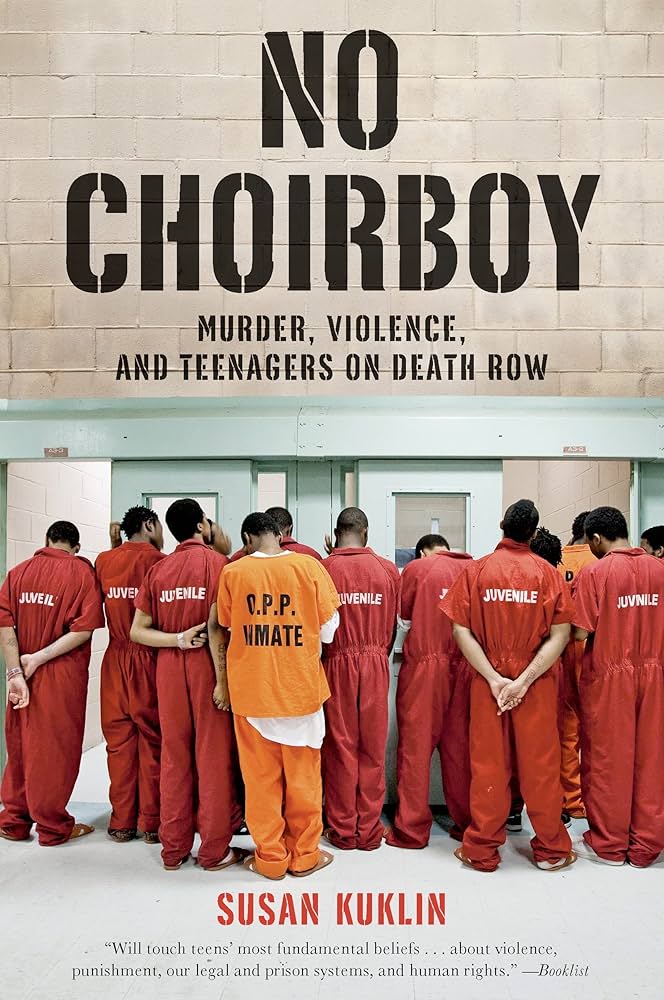
In No Choirboy: Murder, Violence, and Teenagers on Death Row, Susan Kuklin explores the stories of young people who committed serious crimes and ended up facing the death penalty. The book focuses on several real-life cases and presents them through interviews with the teenagers themselves, their families, lawyers, and victims’ families. It does not try to excuse the crimes, but instead shows how complicated these situations are and how factors like poverty, abuse, and lack of support can influence someone’s life choices.
This book powerful is how it challenges the idea that people on death row are simply evil. It shows that these teenagers were once ordinary kids who made terrible decisions, often in violent or unstable environments. At the same time, the book respects the pain of the victims and their families, which keeps it balanced and realistic. The writing style is straightforward and serious, which makes the topic feel more real and mature. Overall, No Choirboy is an eye-opening book that made me think more deeply about justice, responsibility, and whether the death penalty should apply to teenagers. I would recommend it to students because it encourages critical thinking about the criminal justice system and social issue.
It also helped me realize that the justice system is not always fair or equal for everyone, especially for young people who grow up without guidance or support. The book made me question whether punishment alone truly solves problems or if prevention and rehabilitation should be taken more seriously. By sharing multiple perspectives, Susan Kuklin allows readers to form their own opinions instead of forcing a single message. This made the book more meaningful and impactful. Choirboy shows that real life is complicated and that every action has lasting consequences, not just for the person who commits the crime, but for families, victims, and entire communities. Reading this book changed the way I view crime and justice, and it encouraged me to think more carefully about how society treats young offenders.